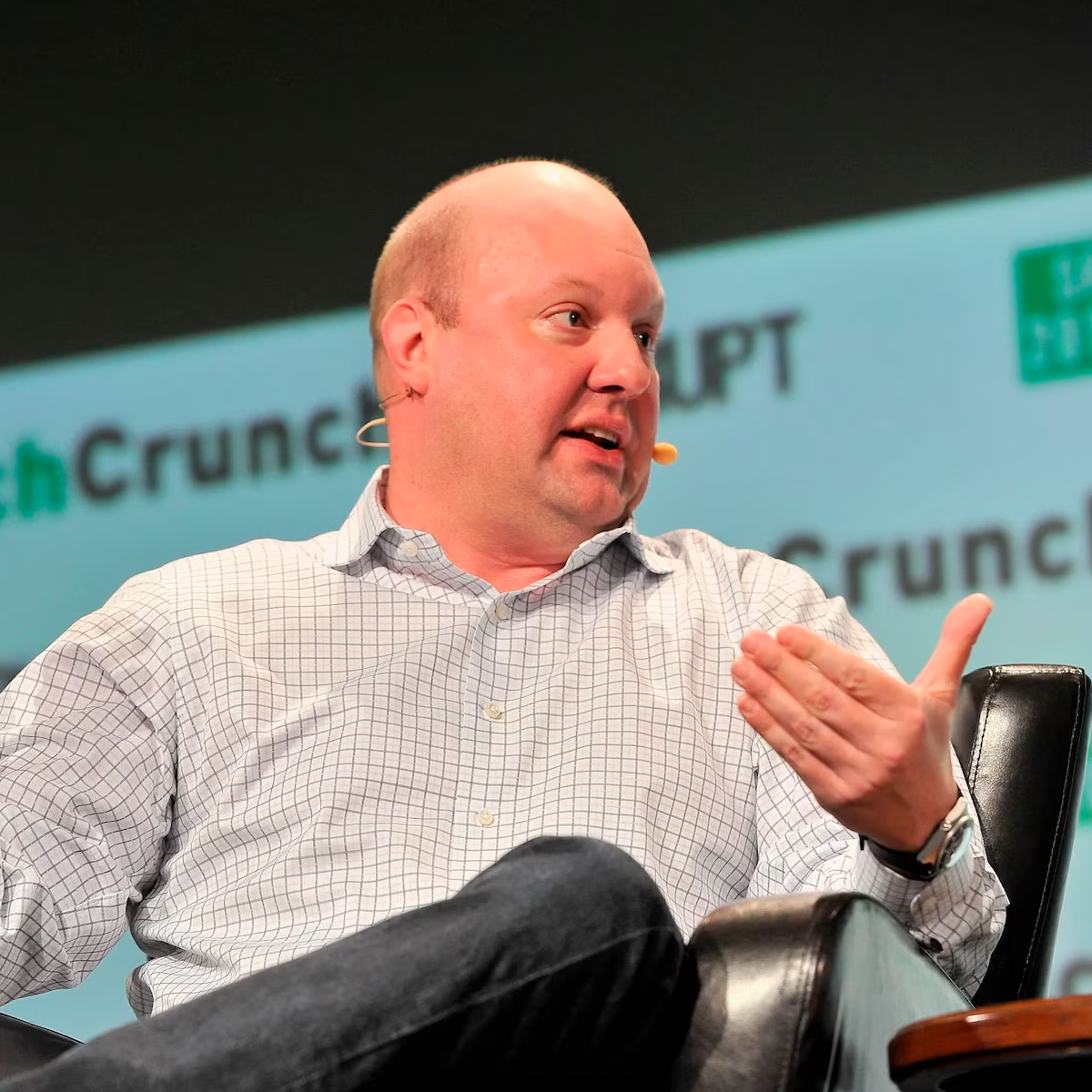
Marc Andreessen, cofounder of Netscape and one of the most influential investors in tech through his firm Andreessen Horowitz, has a pretty unusual take on productivity. Andreessen Horowitz has backed companies we all know, like Facebook, Airbnb and GitHub, fueling many of the most successful startups in the world. His approach breaks a lot of established rules and feels freeing, but also demanding. Today I want to share and break down some of the most interesting points in this guide, with my own take on how to apply them day to day. Let's go:
Don't keep a structured calendar
Marc opens with an idea that might sound crazy to most of us: don't keep a structured calendar. Basically, he proposes refusing to commit to meetings or activities at specific times so you can focus on whatever is most important or most interesting at any given moment. Imagine the freedom of working only on what has real impact, without the distraction of meetings that often feel more like time theft.
Sure, this isn't for everyone. If your job depends on structure, meetings or coordinating with others, it gets complicated. But if you have some flexibility, it's a way to maximize what actually adds value. It's a bit like keeping room open for improvisation. If you have the freedom to try it, it can be one of the most freeing things you do for your productivity.
3 lists, and nothing else
Andreessen suggests keeping just 3 lists:
- A to-do list (what you absolutely have to do).
- A watch list (things you're waiting on or need to check).
- A "later" list (ideas and loose ends that can wait).
If something isn't on those lists, it simply doesn't matter. It sounds so simple, but it really helps you focus only on what counts and cut out the noise.
Daily planning on a sheet of paper
One of my favorite parts is the idea of using a small sheet of paper or a simple list. The night before, you write down 3 to 5 key tasks for the next day, and then the next day you focus on getting them done. It seems ridiculously basic, but it can be really powerful. We often overload ourselves with tasks and end the day feeling unproductive. With this technique, you can end the day knowing you did what you set out to do.
Structured procrastination
This one's great: instead of fighting procrastination, use it! If you're avoiding something, channel that energy into doing other productive things. We've all done it at some point, but naming it and using it on purpose can be a game changer.
Strategic incompetence
This one made me laugh. The idea is that if there's something you don't want to do, the best way to never get assigned that task again is… to do it really badly the first time. Not a technique for everything, but it has its charm.
Only deal with email twice a day
If you feel like email runs your life, this tip can be especially useful. Andreessen suggests checking email only twice a day to avoid the constant interruption of checking messages every few minutes. This is especially true if you want to work on something that requires deep focus.
Don't answer the phone
Simple: let calls go to voicemail and then return the important ones. The goal is to avoid constant interruptions, and with headphones on, you can even keep people from bugging you at the office.
Only do what you love
Finally, and probably most important: if you're not doing something you love, it's time to change. If you focus on what you're truly passionate about, it'll be much easier to be productive and avoid distractions that add nothing.
Conclusion
What I like about this guide is that it's not about following a rigid set of rules, but about finding ways to free yourself from distractions and focus on what really matters (moving the needle). There's a lot to learn here, but above all, it's about keeping what resonates with you and dropping the rest.
The simplified version:

Here's a simplified version of this guide you can download directly. It started from the original post, plus a tweet that inspired me, and I adapted it to make it easier to share. #NeverStopLearning