
In startups there's an uncomfortable truth few people will tell you: if you can't survive on what you sell, you don't have a business. You have an expensive hobby.
In Latin America, that's even more true. You can't count on raising money to keep the lights on. You have to learn to bring in revenue fast, keep costs low and stay alive long enough to play the real game.
I call this Ajinomen Profitable, a concept inspired by Paul Graham's Ramen Profitable, the Y Combinator cofounder. He described a startup as "ramen profitable" when it makes just enough for the founders to cover the basics and keep going without outside investment.
The name "Ajinomen" comes from the instant noodles (instant soup cups) almost all of us in Peru have eaten at some point: because we were craving them, because we were in a rush, or because the money just didn't stretch any further.
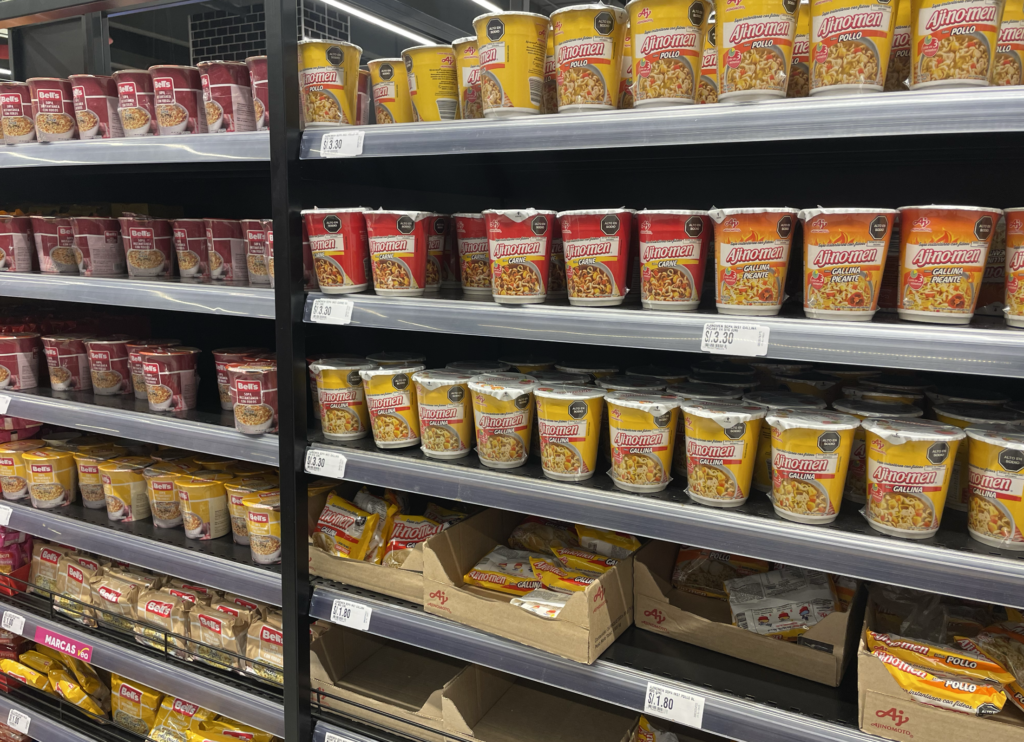
It's not about holding on just to hold on. It's about stretching every $ale far enough to give the business a real shot at taking off
📌 What is Ajinomen Profitable?
Simple: if your business can't pay you the bare minimum to live, it's not profitable.
✅ It covers the essential costs (operations, a minimal team).
✅ The founders can pay themselves the basics without touching savings.
✅ Every customer makes the business more stable instead of burning more resources.
✅ You don't need outside money to keep operating.
If you're still living off savings, debt or investment, you're not Ajinomen Profitable yet.
💡 Real Ajinomen Profitable stories
This isn't theory. This is what surviving in order to build actually looks like.
🔹 The office was my house
In 2016, when it all started, the office was literally my house.
Not because it was ideal, but because it was all we had.
There was no money to rent a space, so we worked from the living room, on a makeshift table, with basic, flaky WiFi.
Yes, over time I realized it was a mistake, but at the start it was the only way to keep moving without dying on unnecessary costs.
🔹 Sleeping at the office to save on rent
A founder I know lived in his office for months to avoid paying for an apartment.
He had an air mattress, a laptop and instant coffee.
While others rented coworking desks or paid for pricey offices, he put every $ into growing his startup.
🔹 Living on the bare minimum to extend the runway
I know more than 1 founder who lived on less than $300 a month in the early days. I was one of them. There was a stretch where I worked without a salary, stretching every $ so the company wouldn't die before it took off.
No luxuries, no restaurants, no unnecessary spending.
The only goal was to get the business off the ground before the money ran out.
And while this is part of the road, the key is not letting it become the norm. Ajinomen Profitable isn't about romanticizing being broke. It's a stage you need to get through as fast as possible.
🔹 Going to events for the free food
During my accelerator program in Colombia, I went to every startup event that had free food.
Networking, learning and dinner sorted. If I could save money and meet key people at the same time, even better.
🔹 Traveling on the smallest budget possible
In 2016 I had to fly to Chile for office hours with Kat Manalac + Kevin Hale from YCombinator. We didn't know anyone there, so we ended up sleeping in a dirt-cheap downtown hostel with bunk beds, 10 to a room. The idea was to spend as little as possible while still moving forward.
🔹 Buying second-hand equipment
When we needed computers to work, we weren't buying the latest MacBooks.
We bought the cheapest thing on OLX, Facebook Marketplace or whatever second-hand gear was around.
If it worked, it was good enough.
🔹 Selling door to door to validate the business
Before GetLavado had customers, I went laundry by laundry explaining the concept and convincing owners to give us a shot. There was no money for ads, inbound marketing or big content strategies. It was hit the street, talk to customers and close deals face to face.
Do whatever it takes to stay afloat without slowing growth.

Before you think about scaling, make sure you (and your team) can eat and pay for the basics ;)
⚠️ Mistakes that keep you from getting Ajinomen Profitable
❌ Building a full product before you've sold it.
❌ Spending on marketing before you understand how to sell.
❌ Relying on investment instead of revenue.
❌ Wasting time on big customers who take months to decide.
❌ Not knowing how much you actually need to live.
Survive first. Scale later.
🎯 How not to get stuck at Ajinomen Profitable
✅ Keep raising the bar. If you're already covering the minimum, go after margin.
✅ Tighten your processes. Cut costs without cutting quality.
✅ Raise money only when the timing is right. But never depend on it.
🔑 So...
Survive first, then scale
If you're building a company in Latin America, forget about raising money at the start. First, make sure you can survive on what you sell.
📌 The goal isn't to land investors. It's to land customers.
Heads up: this post isn't cheap motivation. It's a survival manual.
If after reading it you still think the key is raising money before you make any, you're playing the wrong game.
If you want more content like this in your inbox, subscribe here ⬇️
🚀 If you liked this post, you might like another key startup concept: 🔗 Do things that don't scale →